NWS Co-Founder Spotlight: Mark Terry
- 02/11/2026
- Category: Faculty Spotlights Environmental Sustainability Featured
"Both my kids learned to walk in these hallways," reminisces Mark Terry, as he walked through the Main School Building earlier this month. Although that was decades ago, Terry remembers that and much more like it was yesterday.
The 2025-26 academic year marks the Northwest School's 45th anniversary, and we're looking back on the people and programs that shaped this vibrant and meaningful place of learning. Over the years, Terry has seen and done almost all of it: not only is he one of the three co-founders of the Northwest School. He also served as Head of School from 1983-1990, and as a full-time faculty member from 1990-2015. As with his fellow co-founders Paul Raymond (1932-2007) and Ellen Taussig, the story of the Northwest School and his own career are closely intertwined.
I gave emphasis to the environmental education core, which involved the very simple act of taking care of the building by cleaning it together. This was the foundation of the environmental obligation - that our responsibility to the planet begins with little acts that you can do in your environment.
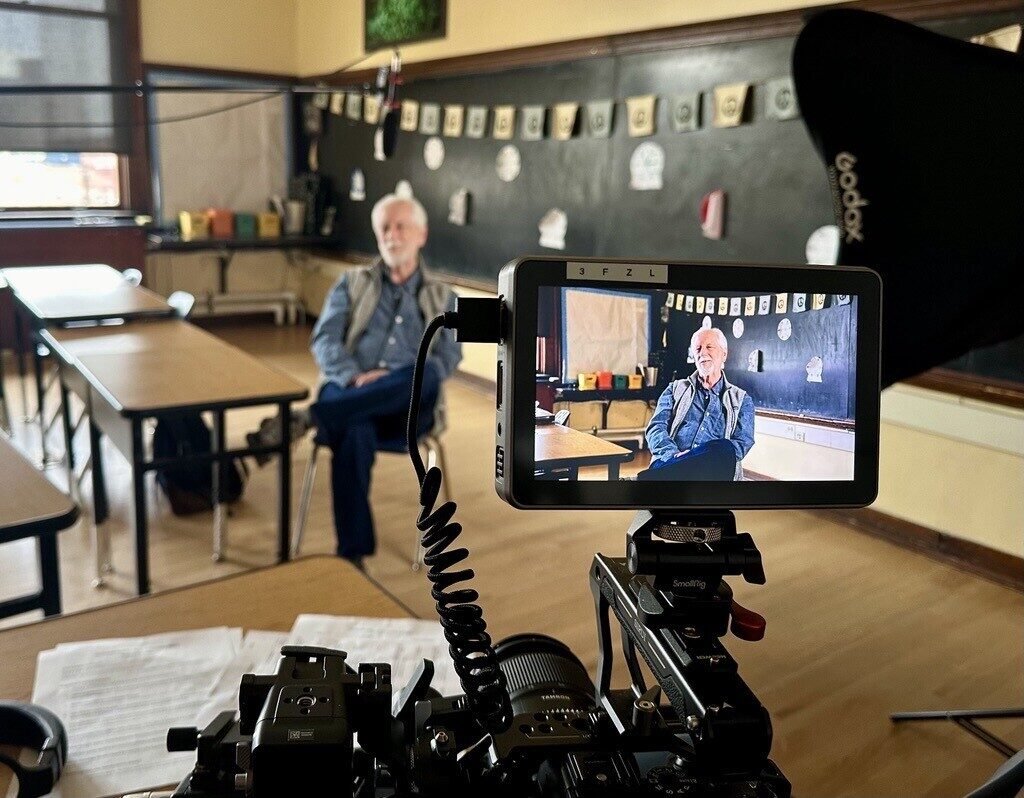
Terry describes the origins of the Northwest School in the late 1970s, as he and the school's two other co-founders identified a clear need for a unique interdisciplinary learning environment. "We all believed in public education," he explains, "But the truth of the matter was that the public schools
were so poorly funded and run we knew we had to start a school on our own. We hoped that our school would serve as a model of what could be done!"
Indeed, the core values that the co-founders held close still guide the Northwest School's mission, vibrant curriculum, and ethos today. "All three of us were passionate about social justice," notes Terry. "And Paul Raymond, in particular, had direct experience with the civil rights movement and early antiracism organizing."
The arts have always had a special place at Northwest, and Terry credits that to his friend and co-founder, Ellen Taussig. "As a trained concert pianist, Ellen oversaw the development of the arts core."
He looks back fondly on his long friendship with Raymond, who passed away in 2007. "Paul hired me as a college sophomore to work in the summer program that he had developed for students from Watts, and we hit it off right away, even though we were quite different in so many ways."
Working together in the '70s, the three founders pioneered interdisciplinary approaches that led to the English and History programs being combined into a multi-year Humanities program, and also intentionally integrated the arts and sciences. Says Terry, “As Northwest began, we were intentional about hiring accomplished faculty who saw the value of interdisciplinary education.†These early efforts are evident in our current interdisciplinary curriculum, that blends academic rigor with the liberal arts in exciting ways. "For instance," shares Terry, "we found interesting ways to connect our twin passions for Biology and the Humanities through evolution studies and the study of Darwin."
When Mark moved into teaching, he was able to link Biology and the Humanities in profound ways. His Primate Biology class was truly transformational!
Early interest in enrolling at the Northwest School exceeded all expectations. "We had initially planned to offer and open just the 9th and 10th grades," discloses Terry. "But when we started opening up admissions, there was so much interest! We had more than half a dozen seniors, and had to expand into higher grade levels. And not too long after, there was a similar big demand for middle school, as well."
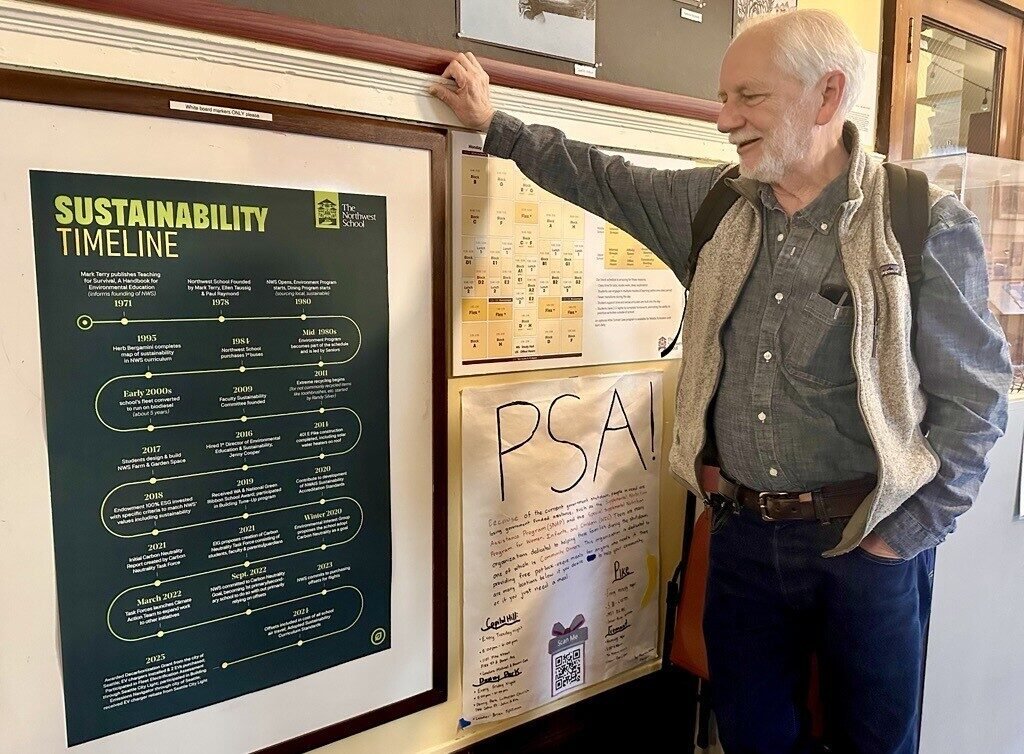
The expertise of Northwest's founders solidified the early curriculum. "In the early days," remembers Terry, "we had an arts division, a humanities division, and an environment division." His individual impact is most evident in the latter, as well as its ongoing legacy in our Environment Education and Sustainability program. "I gave emphasis to the environmental education core," he says. "This involved the very simple act of taking care of the building, with a focus on cleaning together. This was the foundation of the environmental obligation: an abiding sense of responsibility to the planet that begins with little acts that you can perform in your immediate environment."
The Environmental Sustainability program has grown over the years. Terry and program faculty established seniors as leaders within this program, which opened up opportunities for camaraderie and mentorship of younger students, and integrating this core philosophy into lower-level classes. "We have also included components of math and science classes under this umbrella," he adds, "as well as the wildly popular dining program." In this 2018 article, former Northwest Head of School, Mike McGill, outlines how the school's commitment to this core value has guided the program's strategic growth.
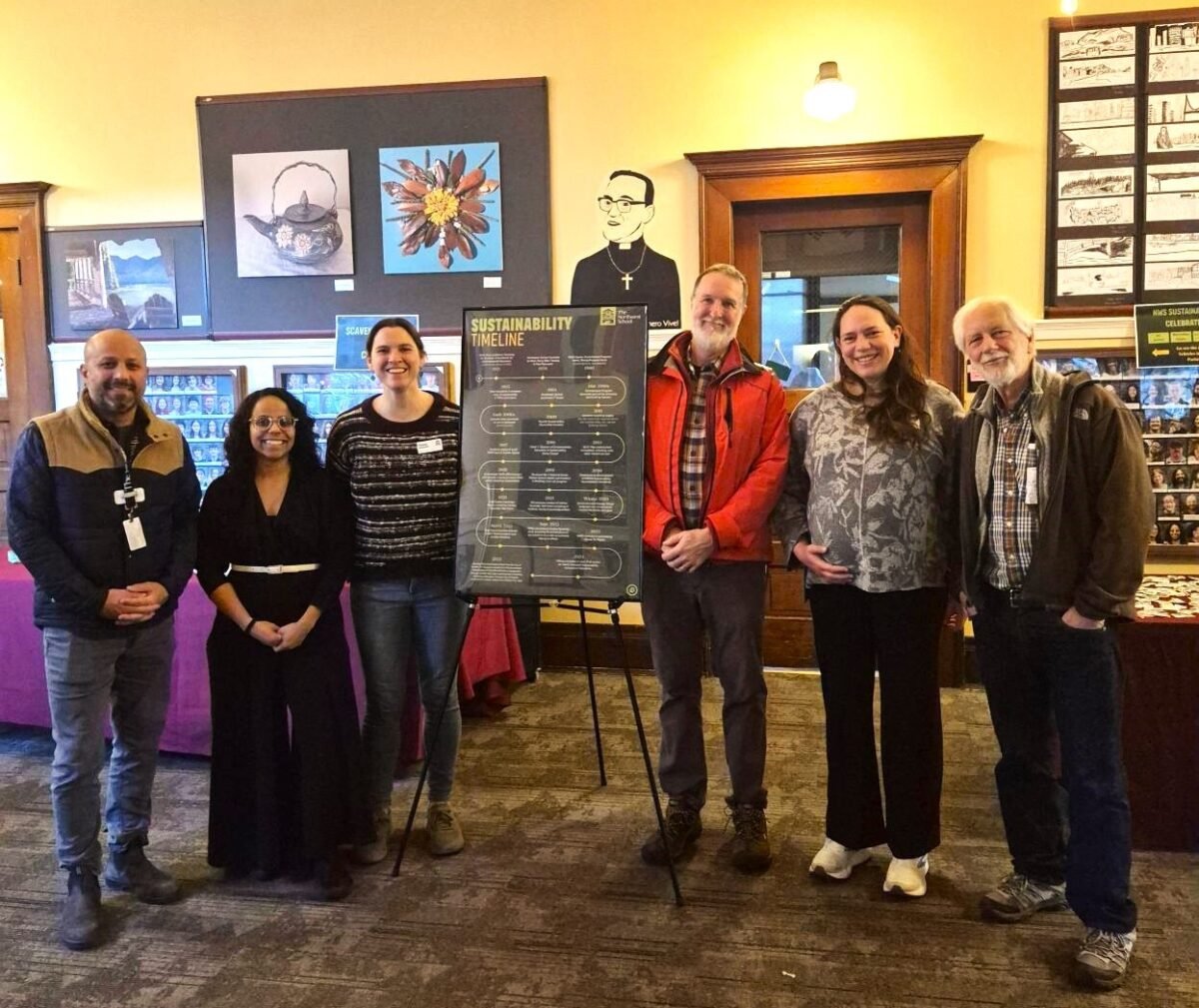
Terry's personal journey and academic prowess are no less staggering than his impact on the Northwest School. A man of varied interests and expertise, he graduated high school as a a National Merit Scholar, and authored the seminal Teaching for Survival (1971, Ballantine Books) six years later, which has sold more than 30,000 copies. In 2011, Terry also received the Evolution Education Award - which recognizes innovative classroom teaching and community education efforts that promote the accurate understanding of biological evolution - from the American Institute of Biological Sciences (AIBS) and the National Association of Biology Teachers (NABT). He served for several years on the Education Committee of the Society of Vertebrate Paleontology, and has developed science curriculum materials for The Smithsonian’s Human Origins Program.
He credits his early pivot from an aspiring philosophy major to anthropology and the natural sciences to "some wonderful public high school teachers" who shaped his beliefs and understanding of the power of education. An avid musician and global traveler, Terry is also a percussionist. During his senior year in high school, Terry studied jazz improvisation at Cornish College of the Arts under Floyd Standifer, who would later be a founding NWS faculty member.
As the Northwest School faces the next 45 years, we are deeply grateful and honored to be shaped by Terry's bold vision and passion.